Engineering Fundamentals of Bars and Extrusion
Why Bar Quality in the Extrusion Process Determines the Lifespan of Your Machine? A Comprehensive Look from Metallurgy to Mechanics In industrial production, the performance and efficiency of an extrusion press are directly proportional to the quality of the raw material fed into it. Aluminum, copper, or brass bars—often referred to as “billets”—are the fundamental building blocks at the heart of this complex process. However, extrusion is much more than simply pressing a metal; it is the art of shaping metal into the desired form in the most efficient, safe, and high-quality manner. Every step in this process, from the molecular structure of the bar to the hydraulic system of the press, is interconnected; a failure in one stage negatively impacts all others.
The Critical Importance of Bars for Machinery and Production: The Key to Long-Term Performance
Molecular Structure and Surface Smoothness: Hidden Dangers and Stable Flow Bars that are of poor quality or contain defects such as air pockets or inclusions (solid foreign matter) cause unpredictable and sudden pressure changes within the extrusion press. This not only shortens the life of the die but also causes severe wear and malfunctions by overloading the press’s hydraulic system, cylinders, and pushing mechanism. High-quality, homogeneous bars with flawless internal structures ensure a stable flow as they enter and pass through the die. This stability significantly extends the mechanical and hydraulic lifespan of both the die and the entire press. Furthermore, this stability guarantees the dimensional tolerances and surface quality of the final product.
Thermal Conductivity and Energy Balance: Efficiency and Cost-Effectiveness Bringing bars to a specific ideal temperature before extrusion is vital for a successful pressing process. Quality bars produced from compliant alloys distribute heat evenly and efficiently to their core. This optimum thermal conductivity prevents the machine from consuming excessive power and energy to push the metal through the die. Excessive power usage not only increases electricity costs but also shortens the lifespan of the motor and hydraulic pumps by placing unnecessary stress on them. Therefore, the use of high-quality bars translates directly into energy savings and longer component life.
Waste Reduction and Material Efficiency: Sustainability and Profit Margins Using bars that are correctly cut, within dimensional tolerances, and have clean surfaces minimizes defects such as “burrs,” “tearing,” or “surface defects” at the exit of the extrusion profile. Such defects lead to the rejection of the produced profile and increase scrap rates. Utilizing high-quality raw materials ensures less waste production, fewer rework requirements, and maximum yield from the raw material. This is crucial for environmental sustainability and directly impacts your business’s profitability.
Sectoral Durability and Safety Standards: The Foundation of the Final Product Parts produced from extrusion bars are used in many critical areas of industry: chassis and engine parts in automotive, complex facade systems in construction, high-conductivity rails in electronics, or precision components in the defense industry. Each of these applications requires the final product to meet specific strength, durability, and safety standards. A poor-quality or defective bar creates a weakness in the first and most important link of this chain, leading to potential safety risks in the final product, premature failure, and damage to brand reputation. Consequently, bar quality directly affects not only the machine but also the safety of the end-user and the general performance of the product.
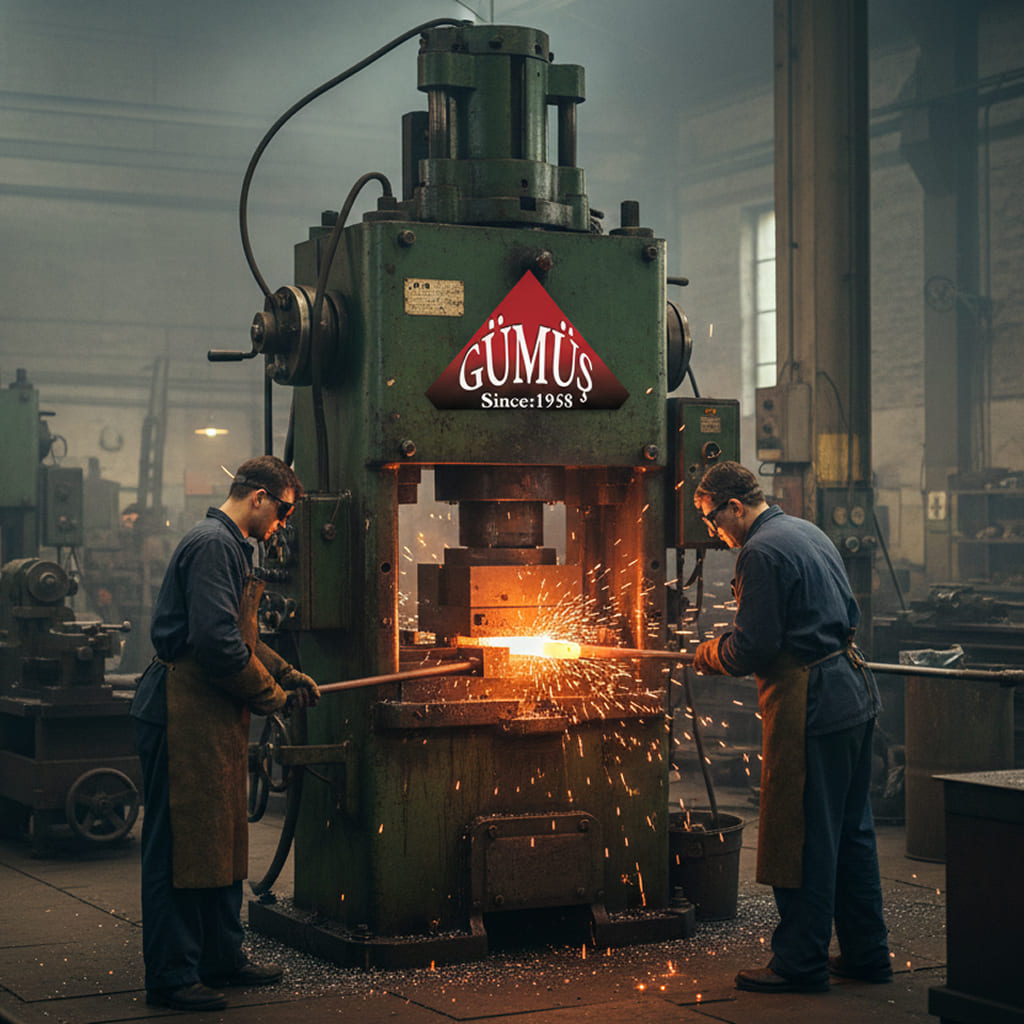
As Gümüş Makina Sanayi, with the deep experience and engineering expertise we have gained since 1958, we design and manufacture our extrusion presses to meet these complex metallurgical and mechanical requirements at the highest level. Our presses are developed with decades of experience to shape even the most challenging alloy bars without fatigue, with maximum efficiency, and the highest precision. We understand the importance of raw material quality and build our machines in light of this knowledge to ensure you achieve the best results.